
New Tory Burch Arrivals Tory Burch Near You

Tory Burch Sale: The Discount Calendar, Explained
There is no published discount calendar from this brand, which means any article handing you fixed dates has invented them. Instead there is a set of event types that come round again, an observable rhythm, and a price structure stable enough to let you judge any reduction. A calendar loses to that combination, because the combination survives a year in which the events move. What follows is a sequence of steps: work out the event, learn the rhythm, get access, build a shortlist, judge the discount, check the off-price routes and read the terms. The prices quoted throughout are observed market figures taken in a September 2026 pass on the brand’s own United States site; they are not an official price list, and the company publishes none. Follow the steps in order and a tory burch sale stops being a scramble.
Step one: work out which kind of sale you are looking at
The word sale covers four different mechanisms, and each behaves differently. The first is the recurring Semi-Annual Sale: a public markdown event on the brand’s own site, covered by consumer press each time it appears. The second is the Private Sale, which sits behind an email list or account and is reported to carry final-sale exclusives. The third is a tiered site-wide promotion offering a percentage off a spending threshold, which is seasonal rather than standing. Fourth is third-party discounting rather than a brand event, taking in off-price retailers and department store clearance. Knowing which one you are in tells you whether to expect breadth, depth, exclusivity or randomness, and those rarely arrive together.
Step two: learn the rhythm and distrust any fixed tory burch factory outlet calendar
The Semi-Annual Sale is real and recurring, which is the only part of its timing anyone can state confidently. Consumer press covered a mid-2026 edition, and that coverage described reductions reaching around half off with some sandals falling under $100. That is reporting on one event, not a published policy, and it is no commitment to repeat. The safest shape to hold in mind is this: major public events cluster loosely around early summer and around year-end, while the Private Sale runs on a separate reported cadence. Month-by-month calendars circulating on coupon and affiliate sites have nothing behind them and are best ignored. Depth figures quoted as high as seventy per cent come from promotional copy, not policy, so plan around the middle of any quoted range.
Step three: get inside the gated events before they open
Of everything here, access is the part you control, and it needs arranging in advance. Open an account and get on the email list well ahead of an event, because those two things are exactly what the Private Sale is reported to be gated by. The account should hold a current address and a saved payment method, as gated events sell desirable sizes out first and a slow checkout will cost you the item. File the emails somewhere you read rather than in a promotions bin you empty weekly. Be careful about where you sign up, since sale season is imitation season too and fake storefronts collect exactly this kind of registration. Register only through the brand’s own site or a retailer you already shop, never through an unsolicited advertisement.
Step four: build the shortlist at full price first
The most reliable technique here is deciding what you want before anything is discounted. Browse at full price, record the exact product names and your size in each style, and put the current price beside each entry. Product names here are descriptive enough to keep the list unambiguous, which is why the full name is worth recording. Fit intelligence belongs on the list as well, since buyers commonly report narrow-running footwear, the Miller sandal often being best taken half a size up, and a wide version existing for some styles. Names cross categories, which is why you should specify the Kira bag or the Kira shoe, and why it is worth remembering that Bombé is a shape modifier inside the Perry line rather than a family of its own. A shortlist assembled like this makes a sale a lookup instead of a decision.
Step five: judge the discount against the observed price bands
A percentage means nothing without a reference price, and this is where sale shopping usually goes wrong. The observed range falls into three rough bands: an entry band of roughly $95 to $200, a core band of roughly $250 to $600 and a top band of roughly $695 to $995. At $200 the Miller sandal sits at the bottom of the leather-shoe ladder, and that is why it works as the gateway product. No five-figure tier exists in this brand, which makes a reduction claimed from an implausible original figure a warning in its own right. The table lists representative observed figures you can use as anchors when a markdown appears. Read it as a snapshot of one market on one day rather than a guarantee.
| Price band | Observed range | Representative observed prices | Usual behaviour in a sale |
|---|---|---|---|
| The entry band | Roughly $95 to $200 | Romy card case at $95, hair clip at $110, Miller Jelly at $150, Miller sandal at $200 | Cuts stay shallow, stock goes fastest |
| Core band | $250 to $600 | Romy slide $250, classic loafer $325, Perry tote $395, Fleming crossbody $470 | Deepest and broadest markdowns |
| The top band | $695 to $995 | Fleming carryall at $695, Small Lee Radziwill Double Bag at $795, wool coat at $995 | Rare, selective reductions |
Step six: check the off-price channels that remain
Brand events are not the only route, though the off-price map changed sharply in 2026, leaving most published advice stale. In early 2026 Saks Global filed for bankruptcy and exited the off-price business, so the Saks OFF 5TH e-commerce site shut down entirely, leaving only around a dozen physical locations as clearance outlets. Do not plan on shopping it online, no matter how many older guides still recommend it. Still standing are Nordstrom Rack, which carries the brand and has been opening stores, and TJ Maxx and Marshalls under TJX, which has reported plans for around 146 net new stores in 2026. Nordstrom full-line clearance carries the brand too, as do authorised retailers including Bloomingdale’s, Saks Fifth Avenue, Shopbop, Zappos and Farfetch during their own events. Physical brand outlet stores also exist, mostly inside premium outlet centres, and are worth verifying against the official store locator before you drive anywhere.
Step seven: read the terms before you buy
Sale terms are where a bargain’s real cost is hiding. Gated events are reported to include final-sale exclusives, meaning no return or exchange, so size confidence must come from the shortlist rather than the delivery. Check whether a tiered promotion applies to the discounted price or the original one, because thresholds calculated after markdown are much harder to reach. Confirm the return window, whether it shortens for sale items, and who pays return postage. Watch the difference between a site-wide event and a curated sale section, which is usually last season’s stock. Finally, distrust any offer promising eighty or ninety per cent off a whole catalogue, because the brand does not discount at that depth and the claim marks an imitation storefront rather than a tory burch sale.
Step eight: work out what is worth waiting for
Not every purchase rewards patience, and knowing which do saves money and prevents missed purchases. Core-band items with wide size runs are the classic thing to wait on, since they carry the deepest markdowns and usually hold enough stock to survive the first weekend. Entry-band items are the opposite, since a $150 or $200 style is already cheap here and popular sizes vanish early. Late rather than early is when seasonal outerwear reduces, while a perennial franchise piece may never reduce meaningfully, since it sells all year. Anything you need in one exact size and colour is a poor candidate for waiting, so buy it when you see it. The same goes for newly launched or relaunched styles, which is why a revived franchise holds its price through its first seasons.
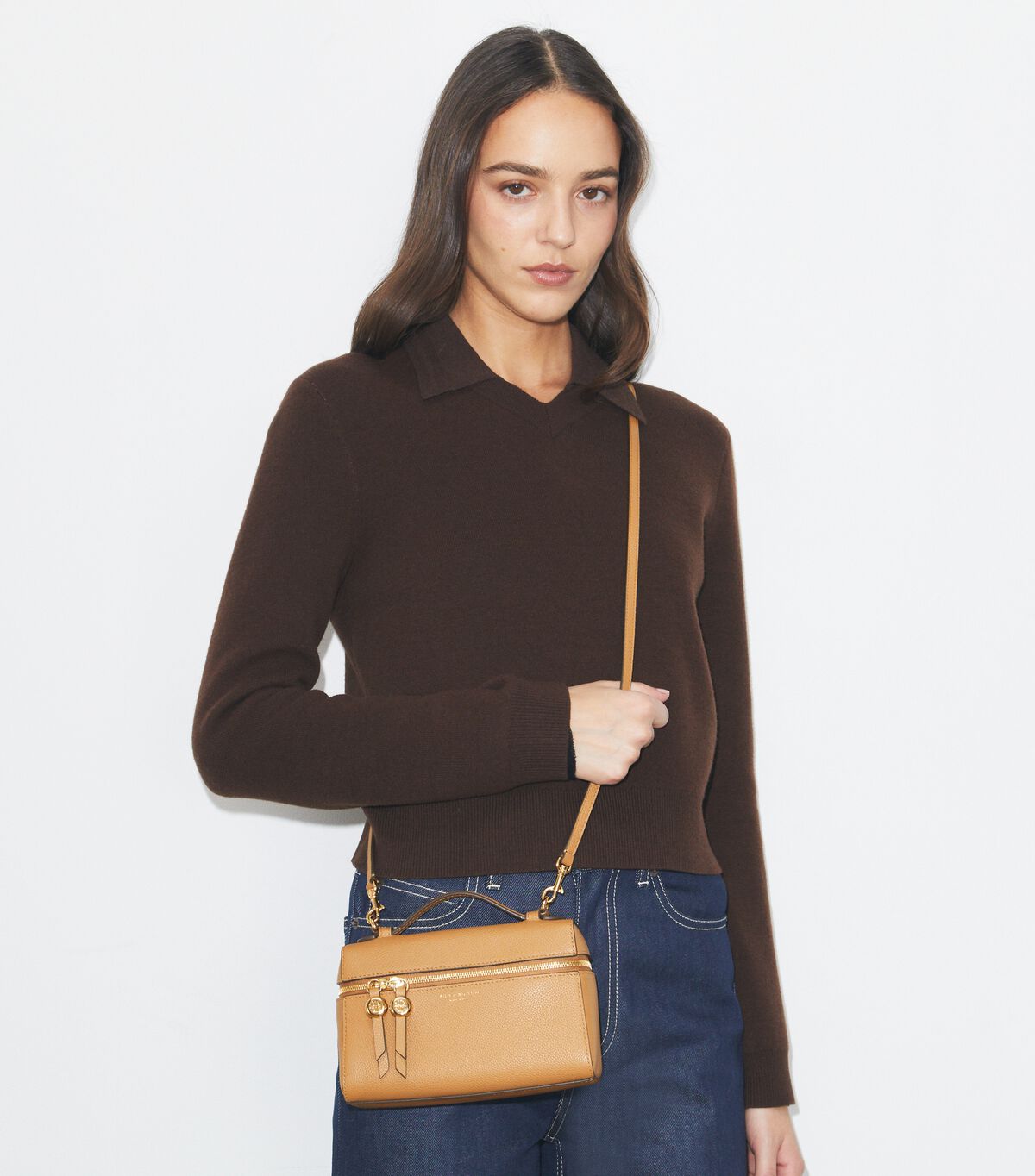
What to avoid in a sale week
Most of the regret in this category comes from three habits. First is buying by discount percentage rather than from the shortlist, the route by which people acquire a colour they will never wear at forty per cent off. The second is trusting an advertisement instead of a channel, since paid social and shopping advertisements are the main route to imitation storefronts in exactly these weeks. The third is treating resale value as a justification, and it does not hold, because this is accessible luxury, the honest story is liquidity rather than appreciation, and none of it is investment advice. Every time, verify the seller before you look at the price, and keep in mind that the brand states it does not operate an online outlet. Keep the shortlist, hold the observed bands in your head, and accept that missing a single event is cheaper than buying three unplanned things. The rhythm will come round again, and it is the discipline that makes the next one pay.

